Section one
The Recipe
Pulled pork from a bone-in pork shoulder (Boston butt), smoked on your smoker — mine is a Pit Barrel Cooker — and finished in the oven. It’s basically set and forget.
-
1
Dry brine overnight
The night before the cook, pat the pork shoulder dry with paper towels. Apply your favorite rub directly to the dry surface — no binder, no mustard, no oil. Set it on a rack in the refrigerator, uncovered, overnight. The salt works its way in and the surface dries out, which sets the stage for the bark.
-
2
Onto the smoker
Light your smoker the way you always do (clean the old ash out first — it matters for airflow) and add some applewood chips. On my Pit Barrel Cooker I’ve been using the grate, but hanging the shoulder works just as well. Insert a probe into the thickest part of the meat, hang a second probe for pit temperature, and put the lid on.
Then leave it alone. The pit temperature will sag when the cold meat goes on and rebuild on its own — that’s normal and it recovers without help. No peeking; the probes tell you everything you need to know.
-
3
Smoke to 165°F
Let the shoulder ride until the internal temperature reaches 165°F. On my cooker that’s right around five hours. By then the shoulder has taken on nearly all the smoke it’s going to take, and the bark has set nicely. This is the moment the smoker’s work is done.
-
4
Wrap in butcher paper
Pull the shoulder and wrap it snugly in butcher paper — paper, not foil — with a splash of apple cider vinegar. The paper soaks up much of the liquid and still breathes, so the bark you built doesn’t suffer terribly for being wrapped.
-
5
Finish in a 275°F oven
Set the wrapped shoulder on a sheet pan in a 275°F oven and cook to an internal temperature of 203°F. This is where the method earns its keep: the oven is a controllable, predictable heat source. Running behind? Nudge it up. Running early? Ease it down. Serving time stops being a gamble.
-
6
Rest in place, as long as possible
At 203°F, turn the oven off. Crack the oven door for a minute to bleed off the excess heat, then close it again and leave the shoulder right where it is. Let it rest as long as your schedule allows — or until the internal temperature drifts down to 150°F. A wrapped shoulder holds happily for hours this way, and it only gets better.
-
7
Shred and serve
Unwrap, pull the bone (it should slide out clean), and shred. Mix the bark through the meat along with any juices the paper didn’t drink.
Why this works
Smoke flavor and bark are built early in the cook; tenderness is built late. By 165°F the smoker has delivered everything it’s uniquely good at, so there’s no reason to fight the fire through the stall. Handing the wrapped shoulder to the oven separates the two jobs: the smoker builds character, the oven builds tenderness on a schedule you control. The long in-oven rest finishes the job, letting everything relax while the meat stays safely hot until it’s time to serve.
Section two
The Last Cook
The recipe above, applied to a real Saturday: two nine-pound pork shoulders, dry brined overnight, smoked on my Pit Barrel Cooker — which earned its keep on this cook — and headed for a 4:00 p.m. serving time. You can tell it’s a proper barbecue day because the first two photos were taken in the dark.
On the cooker
4:50 a.m.
Hours to 165°F
≈5
Oven target
203°F
Served
4:00 p.m.
-
1
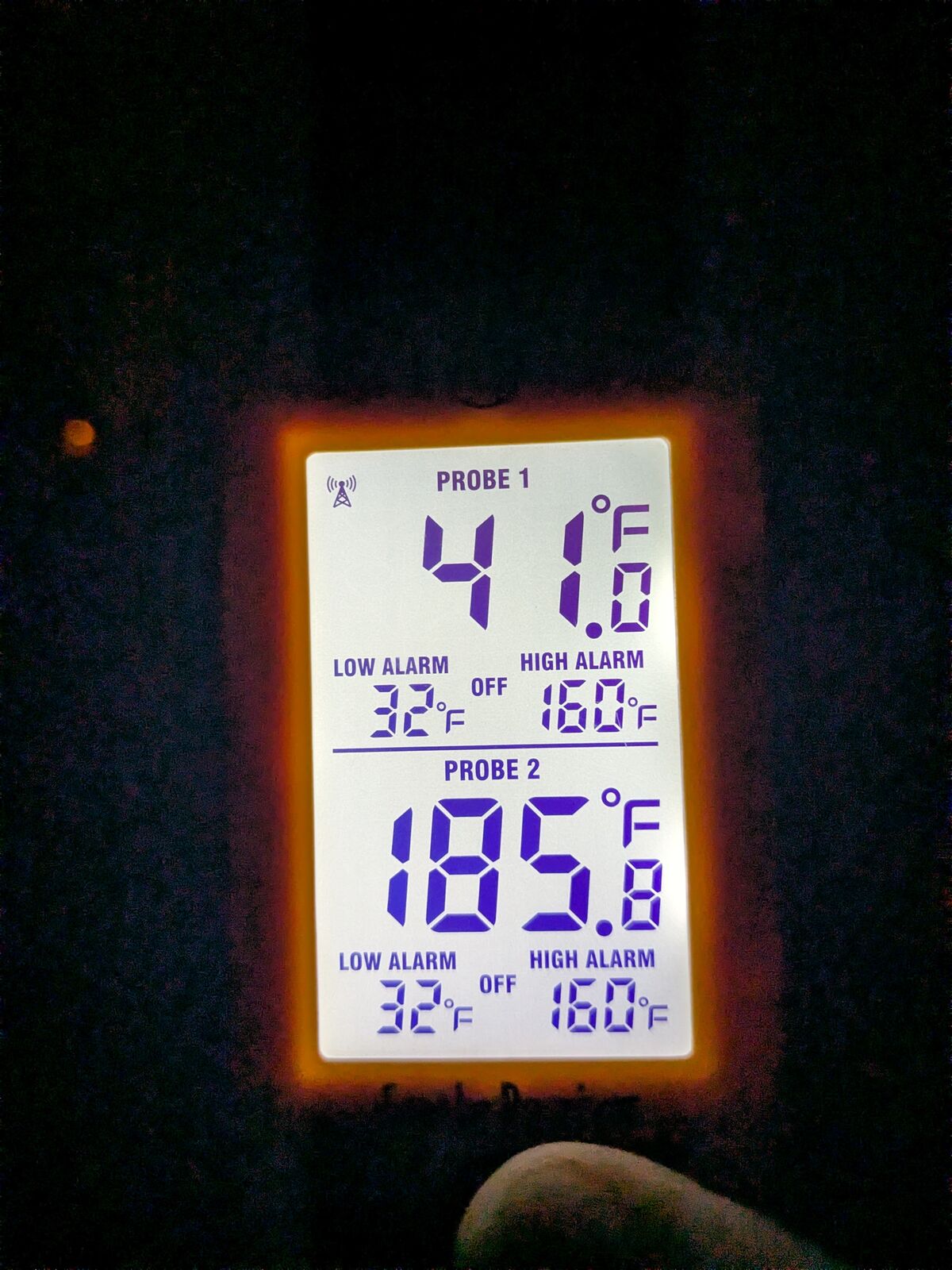
Cold meat, small fire
Minutes after loading. The meat probe reads 41°F — straight from the overnight dry brine in the refrigerator — and the pit reads 185°F, because eighteen pounds of cold pork just knocked the fire back. No cause for alarm; the PBC always rebuilds from here.
-
2
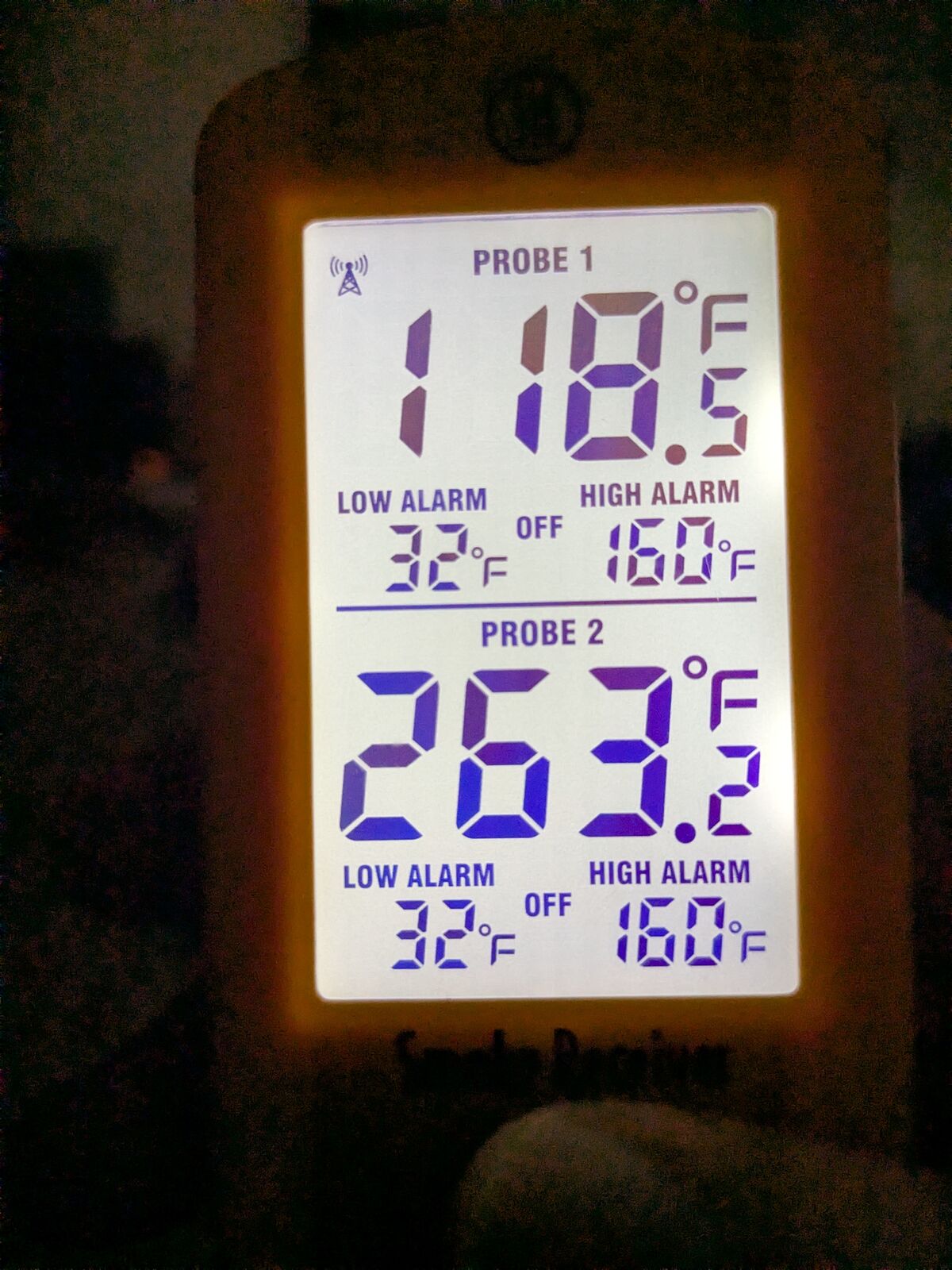
Two hours in, still dark
Meat at 118°F, pit rebuilt to 263°F — right in my cooker’s natural cruising range. The lid hasn’t come off once. This is what “set and forget” looks like: the probes report, I drink coffee.
-
3
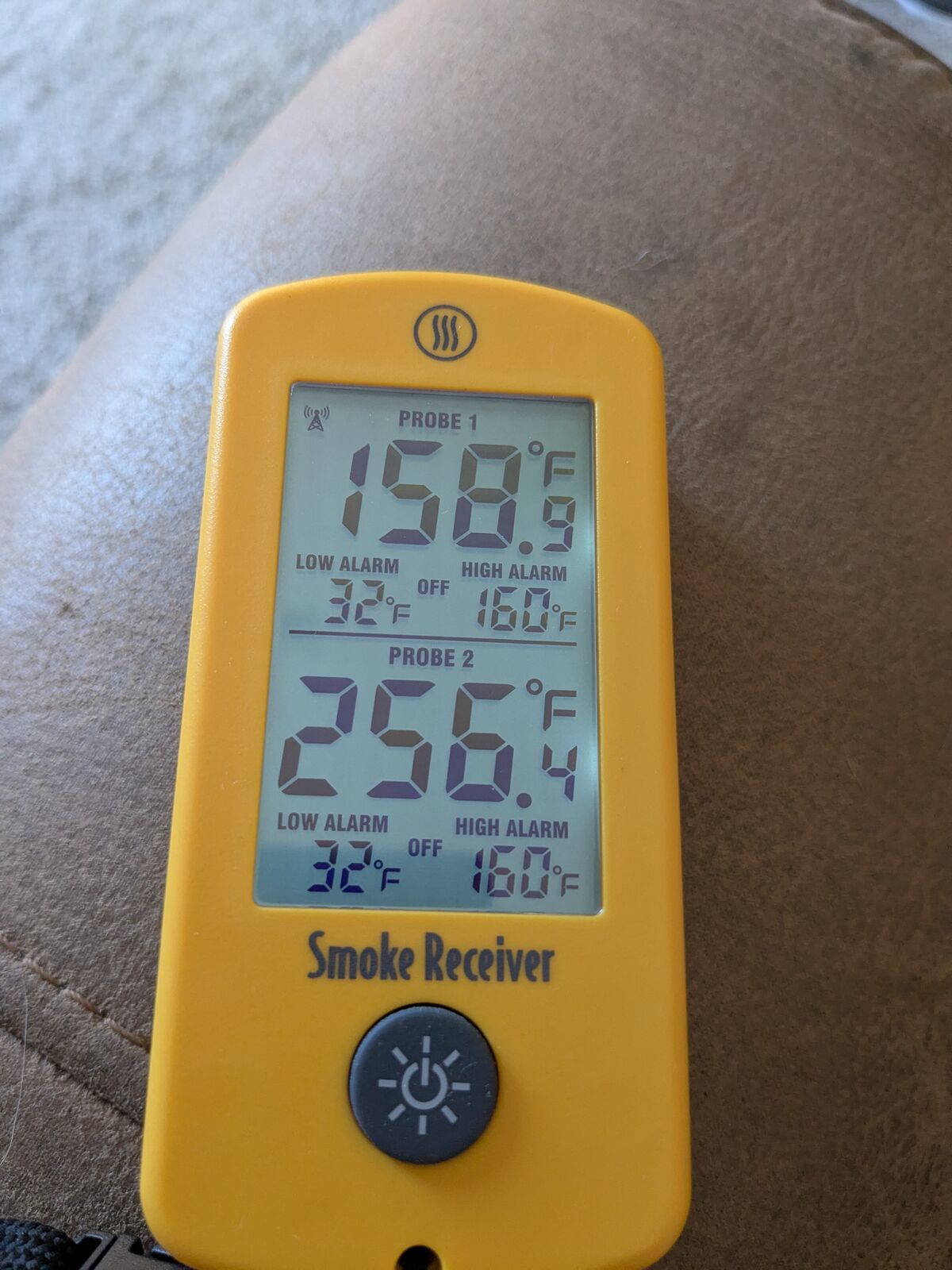
Daylight, and closing in
Four hours in: meat at 159°F, pit steady at 256°F. Along the way the pit dipped briefly — likely rendering juices dripping onto the fire — and recovered on its own, exactly as this cooker always does. Trusting that pattern is half the method.
-
4
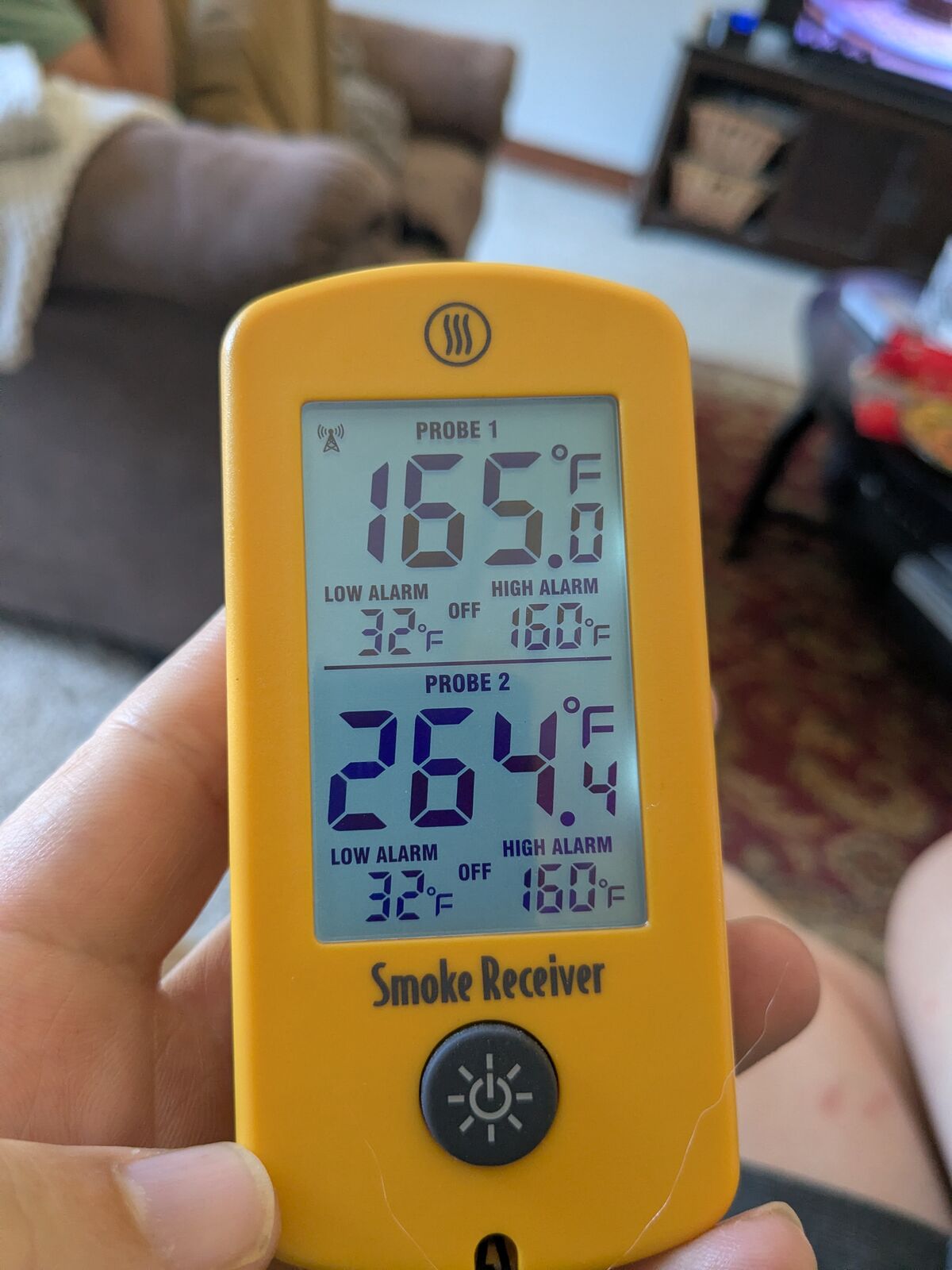
165°F on the nose
Just shy of five hours on the barrel and the meat probe lands on 165.0°F exactly — the decision point. Time to look at the bark and, if it’s ready, make the handoff to the oven.
-
5
The first look of the day
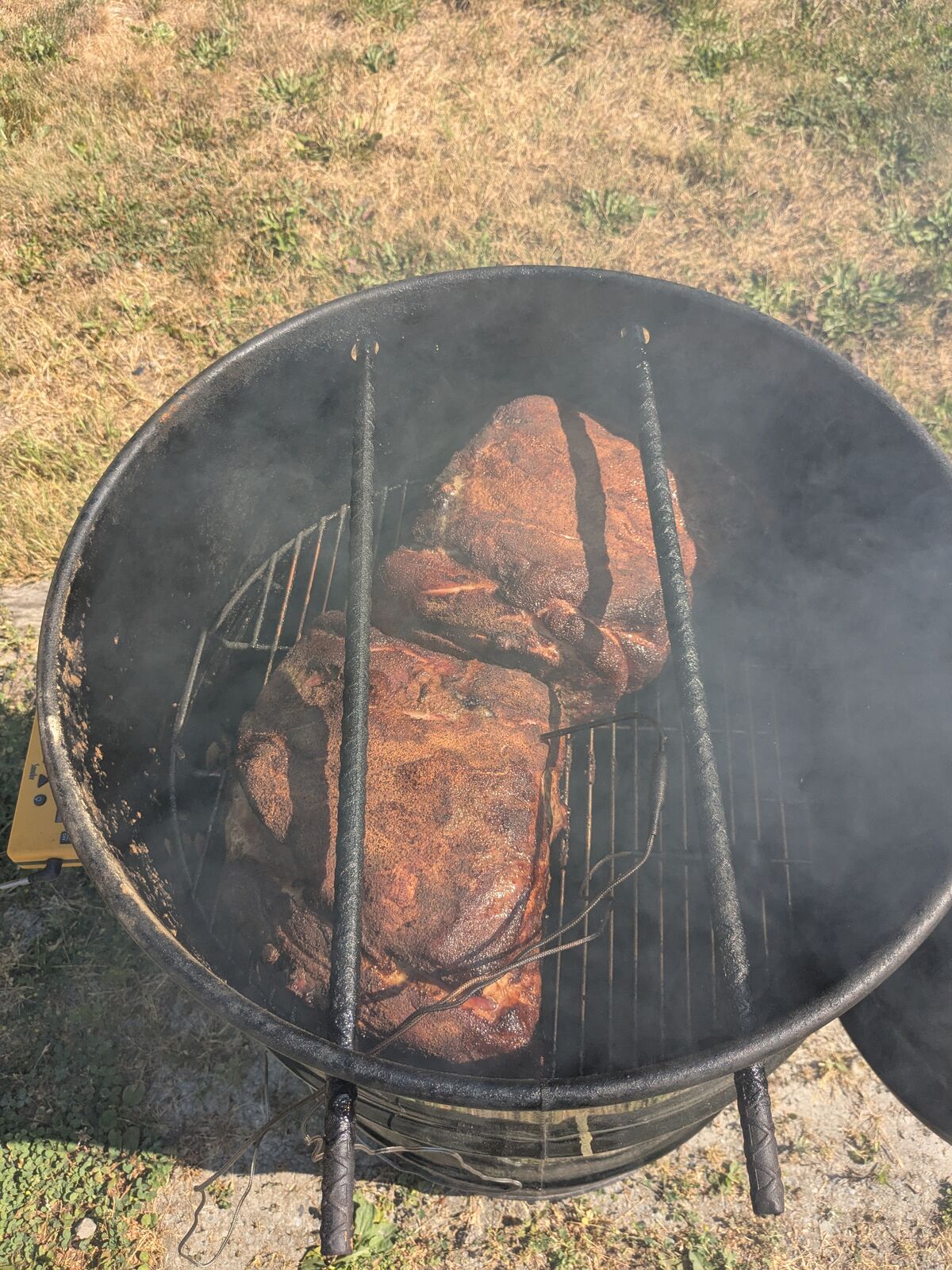
The lid comes off for the first time in five hours. Two shoulders on the grate, smoke still rolling, and the bark is where I want it — deep mahogany, set firm by the overnight dry brine and a patient fire. This is everything the Pit Barrel was asked to do, and it’s done.
-
6
Wrapped and into the oven
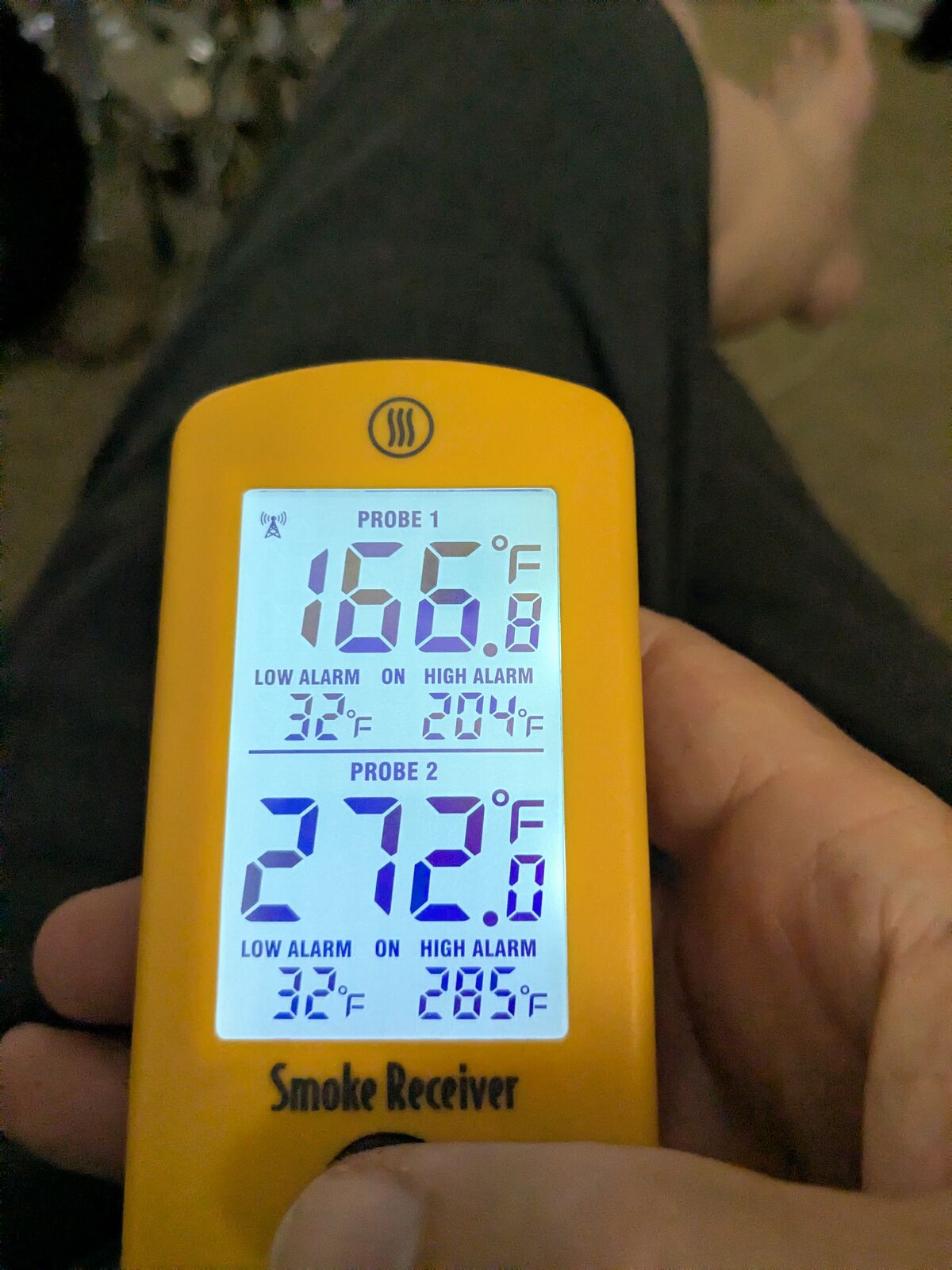
Both shoulders wrapped in butcher paper with a splash of apple cider vinegar and moved to the 275°F oven. Note the receiver’s job change: the high alarm is now set to 204°F, and probe two is reading the oven instead of the pit. The meat is already climbing again after a short, paper-compressed stall.
-
7
Cruising through the one-eighties
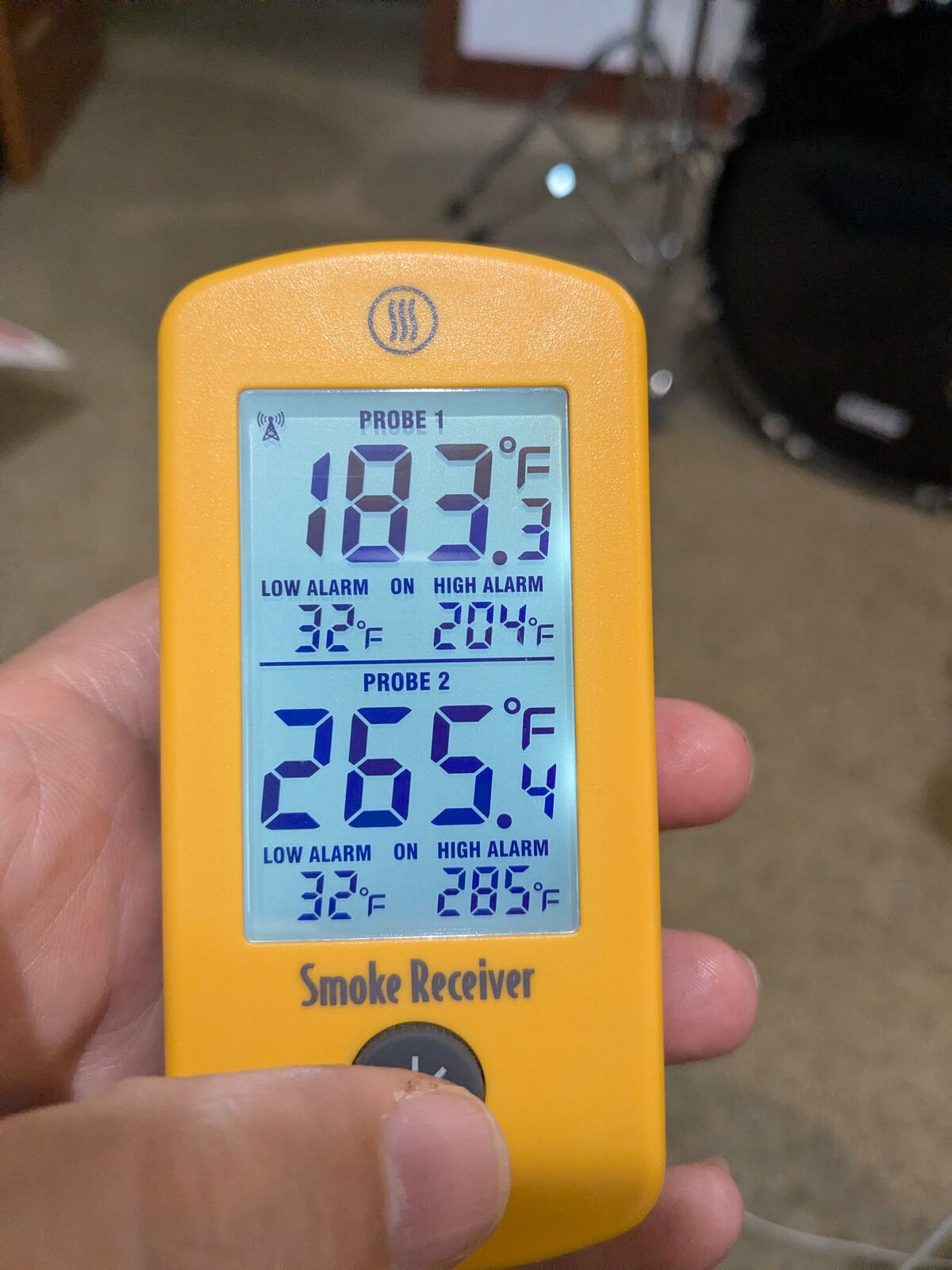
The last photo of the day: 183°F and climbing steadily, collagen quietly turning to gelatin. From here the cook was so uneventful that nobody thought to take a picture — which is, frankly, the point of the method. You’ll have to take my word for the oven’s work.
-
8
The afternoon: 203°F, oven off, long rest
Early afternoon, the shoulders reached the target and probed tender. Oven off, door cracked for a minute to bleed the heat, then closed again while the shoulders rested in place until it was time to leave. Both shoulders turned out reasonably well — well enough that they were nearly entirely consumed at the event they were cooked for, which is the only review that counts.
The probe log, at a glance
| Time | Meat | Pit / Oven | Note |
|---|---|---|---|
| 4:50 a.m. | 41° | — | Onto the PBC |
| 6:50 a.m. | 118° | 263° | Pit rebuilt |
| 7:50 a.m. | 144° | 233° | Brief pit dip; left it alone |
| 8:50 a.m. | 159° | 256° | Recovered on its own |
| 9:48 a.m. | 165° | 264° | Decision point: bark check |
| 10:15 a.m. | Wrapped in paper + splash of ACV | Into the 275° oven | |
| 11:32 a.m. | 183° | 265° | Cruising to 203° |
| Afternoon | 203° | Off | Rest in place until service |
Section three
What’s Next
The recipe above is reliable, but the bark can be even better — and that’s the direction of future experiments. The plan is a late-wrap method: instead of wrapping at 165°F, let the shoulder ride unwrapped until 185–190°F, wrapping only once the bark has become exactly what it should be, and using the paper just for the final stretch. One variable changed at a time, same dry brine, same cooker, same probes — so whatever the result, it will actually mean something. Results will be posted here.